What to Wear and Carry on a Walking Tour in Sardinia

What to wear on a walking tour in Sardinia comes down to three decisions: shoes that handle stone, a light layer for the underground cold, and something to cover your shoulders and knees if the cathedral is on the route. Tours here don't hand out gear, so what's on your list is short and it's yours to sort before you leave the hotel. I'm Giulia Marras, and after years of walking visitors up through Castello, the same three questions come up every week: what shoes, do I need a jacket in August, and will I be turned away for wearing shorts. This page answers all three, plus the full packing list, what not to bring, and how the answer changes by season.
Quick answer
Wear closed-toe walking shoes with real grip, carry a light layer even in August for the underground Cagliari sites, and bring something to cover your shoulders and knees for the cathedral. Every Cagliari walk here except the driven Cagliari Without Secrets tour is unsuitable for people with mobility impairments, which tells you plainly what the terrain underfoot is like.
Key takeaways
- Tours provide the guide and the route; you provide your own shoes, layers and cover-up, nothing is handed out
- The one thing not to wear on Castello's stone lanes is anything without a closed, gripping sole
- The underground Cagliari sites stay at 12 to 16°C year round, so a light jacket belongs in your bag even in August
- The Cagliari old city walk asks for shoulders and knees covered to enter the cathedral, easy to solve with a scarf or a light layer packed in advance
- In summer, the free lifts up to Castello shut around midday, covered in full further down this page
- If your walk is the Castello alleys walk, the same stone-lane rule applies for the full two hours
Shoes: The One Decision That Matters on Sardinian Basalt
Castello's lanes are steep and paved in stone, and it shows in the operator warnings: every Cagliari walk on this site except the driven Cagliari Without Secrets tour declares itself unsuitable for people with mobility impairments. That's not a throwaway line, it's the operators telling you exactly what the underfoot conditions are before you book.
What works
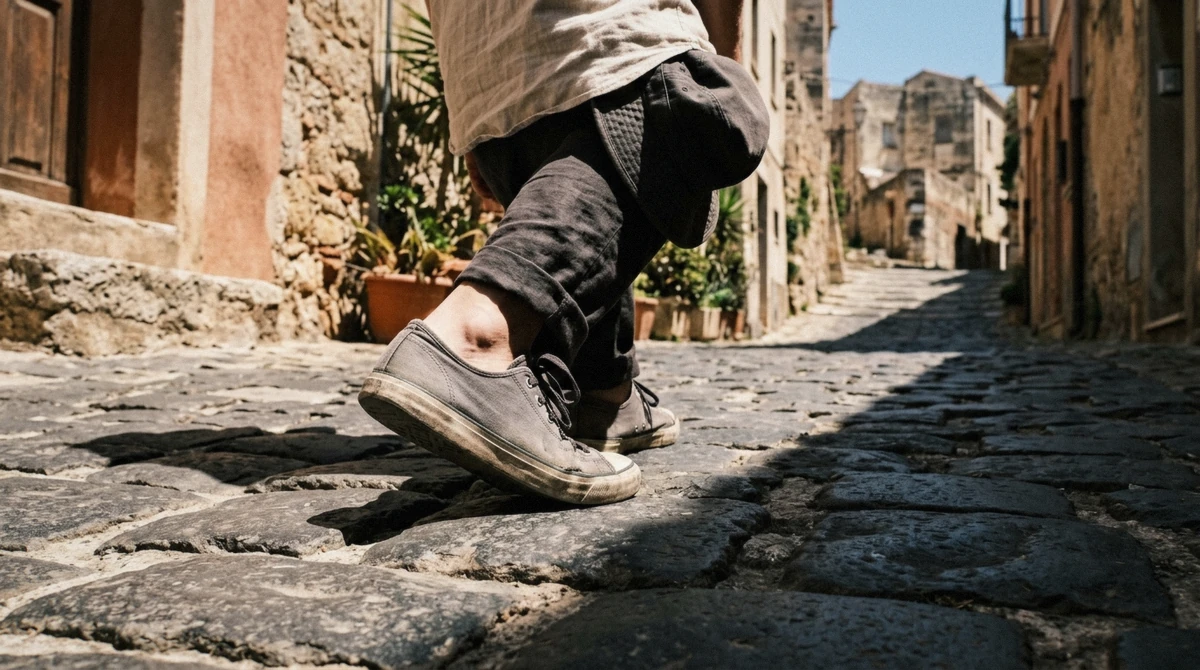
Closed-toe sneakers or light hiking shoes with a real tread. The stone in Castello is old, polished by centuries of foot traffic, and smooth in patches even when dry. Grip matters more than cushioning here.
What doesn't
Sandals, flip-flops, or anything with an open toe or a loose strap are the wrong call on these lanes, a slipped sandal on a downhill stone stretch is a genuine hazard, not just a comfort issue. Heels are a non-starter for the same reason. Save the sandals for the evening, after the walk is done.
What to Wear
Beyond the shoes, keep it simple: breathable layers you can add or remove as the day warms up, and a top you can pull over your shoulders if the walk's route includes the cathedral.
A color-guide worth knowing before you pack, since it changes what actually feels comfortable on a stone-and-sun walk rather than what merely looks the part.
| Color | Good? | Why |
|---|---|---|
| White or light neutrals | Good | Reflects heat on an exposed bastion walk with no shade for long stretches |
| Black | Bad for daytime | Absorbs heat under direct sun; fine if you're out again after dark |
| Earth tones | Good | Cooler in the sun than dark colors and blends into stone and old-town settings without standing out |
| Bright or neon | Neutral | No safety reason to avoid it on a town walk, unlike a boat or trail tour where visibility to a guide matters |
| Cotton | Bad for the underground leg | Stays damp once you've warmed up on the walk, then feels cold the moment you step into 12 to 16°C air |
| Quick-dry synthetic | Good | Handles the temperature swing between a hot Castello lane and the underground cold better than cotton |
| Dark colors, generally | Neutral to bad | No cultural or legal restriction in Sardinia, purely a heat-comfort call on a sun-exposed route |
What to Bring
A short list, not a suitcase. Everything below fits in a small day bag.
- Water bottle, the bastion walk has stretches with no shade and no fountain in sight
- Light jacket or shawl, for the underground leg, which sits at 12 to 16°C whatever the season
- A scarf or light layer that covers shoulders, for the cathedral, no need to buy anything special
- Sunscreen, Castello's open bastions and Alghero's seafront both run exposed for long stretches
- Hat, the same shadeless stretches make a hat worth the small effort of packing one
- A few euro in cash, museum and site fees at the door are in euro, not always cleared by card
- Phone or camera with a secure strap or pocket, you'll want both hands free on the steeper lanes
- A small daypack rather than a shoulder bag, easier to carry through narrow, crowded alleys
- Comfortable socks, the same closed shoes you're wearing for grip need socks that won't blister on a two-hour walk
The Walks These Clothes Are For
Every walk below crosses at least one of the surfaces or sites covered above, stone lanes, cathedral interiors, or the underground cold.
 from $25
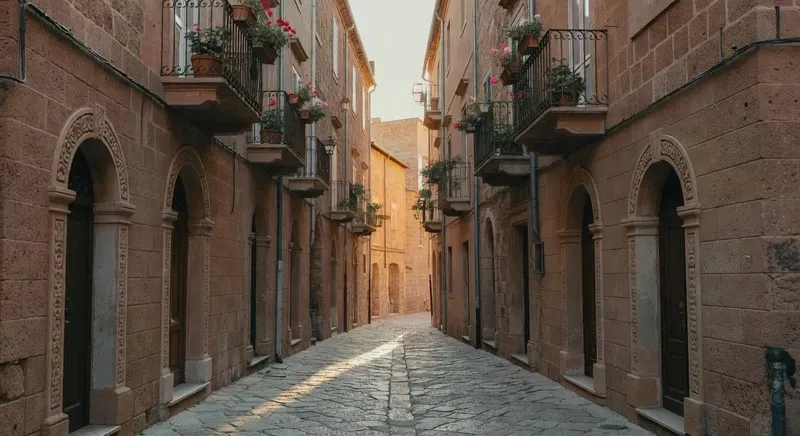
Cagliari: Walking Tour of the Old City
Walk through the narrow streets of Castello — Cagliari's ancient hilltop fortress district — with a certified local guide revealing medieval towers, the royal palace, the cathedral and…
- Castello district — Pisan towers, Governor's Palace, Cathedral
- Panoramic views of the city, sea and Molentargius lagoon
- 2-hour, 3-hour and 4-hour options available
- Private tour with Sardinian snack option
 from $35
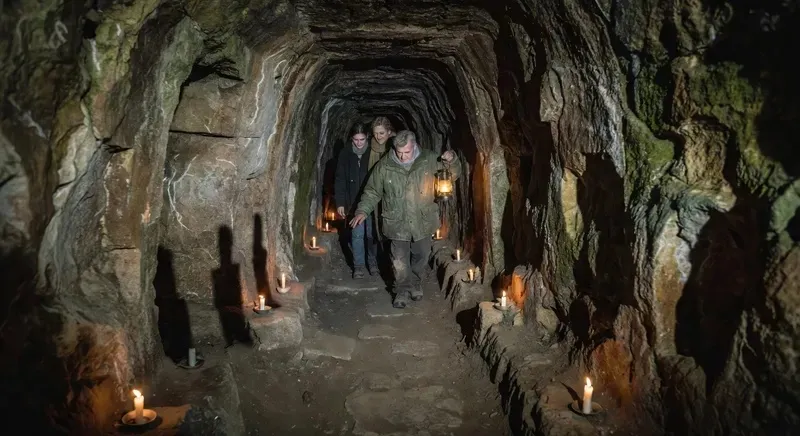
Cagliari: Underground Walking Tour
Journey beneath Cagliari's sunny streets to explore three distinct underground sites: a 120-metre WWII bunker tunnel, the 5th-century Crypt of Santa Restituta with original frescoes, and the Roman…
- GetYourGuide Certified — 2,758 verified reviews
- 120-metre WWII bunker beneath the Salesian school
- Crypt of Santa Restituta (5th century) with original frescoes
- Roman road and ruins beneath Sant'Eulalia church
 from $55
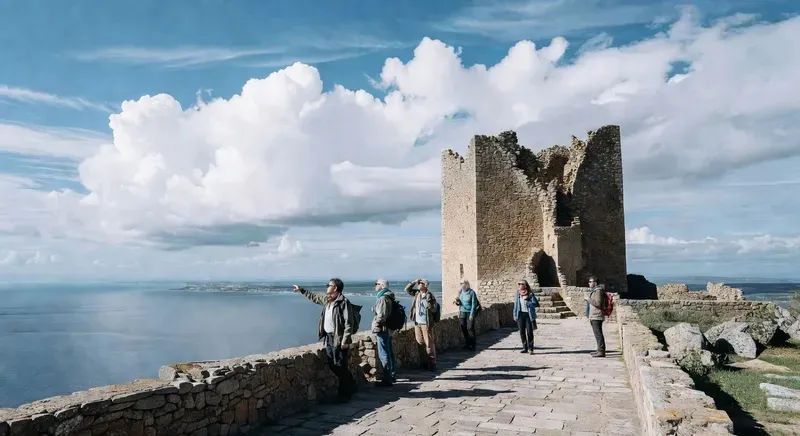
Castelsardo: Old Town Walking Tour with Aperitif
Discover the medieval village of Castelsardo — one of northern Sardinia's most evocative hilltop towns — as an expert local guide leads you through ancient city walls, the…
- Ancient city walls, Porta Pisana and Castello dei Doria
- Gulf of Asinara panoramic views
- Sardinian aperitif included in the price
- Guide in English, French, Spanish or Italian (single language)
What to Wear by Season
The table reads as one rule with seasonal variations rather than four different wardrobes. The shoes never change. What changes is how much you carry on top: a real layer from November through March, a packable one in spring and autumn, and in July and August something you can take off in the sun and put back on the moment you go below ground.
| Season | On top | On your feet | In the bag |
|---|---|---|---|
| Winter (December to February) | Light jacket or fleece, layers you can shed indoors | Closed shoes with grip, same as any season | Scarf doubling as a cathedral cover-up, a light rain layer |
| Spring (March to May) | T-shirt with a light layer for morning starts | Closed sneakers or light hikers | Sunscreen, water bottle, the underground jacket |
| Summer (June to August) | Breathable, light-colored top, quick-dry synthetic over cotton | Closed shoes, socks that won't overheat | More water than you think, hat, sunscreen, the underground jacket even in August heat |
| Autumn (September to November) | Light layers, similar to spring | Closed shoes with grip | Water bottle, light layer for cooler evenings |
The Layer Nobody Packs: Underground Cagliari's Real Cold
The Underground Cagliari walk crosses three sites, a 120-metre WWII bunker tunnel, the 5th-century Crypt of Santa Restituta, and the Roman road beneath Sant'Eulalia church, and all three sit at 12 to 16°C year round. That's the one packing detail visitors consistently miss in August, when the town outside is warm enough that a jacket feels like the wrong thing to carry. Bring it anyway, roll it small in the bottom of your bag, and you won't be the one shivering through the crypt while everyone else planned ahead.
I have watched this catch people out in the middle of August. They come off a street at thirty-something degrees, spend forty minutes in a stone crypt at fifteen, and come back up cold and slightly annoyed. A cotton shirt that has already absorbed the climb up to the meeting point is the worst possible thing to be wearing at that moment.
If you are booking the underground Cagliari walk, treat the light layer as equipment rather than an optional extra, and keep it in the bag rather than around your waist so it stays dry.
Covering Up for Churches
The Cagliari old city walk's own advice is to wear attire that covers shoulders and knees to enter the cathedral, that's the tour's practical guidance, not a published diocesan rule, since no official cathedral dress code is posted. Cagliari Cathedral is open Monday to Saturday 09:00 to 20:00 and Sunday 08:00 to 13:00 and 16:00 to 20:30, so there's a real window to plan around if a specific visit time matters to you. The fix is simple: a scarf or light shawl folded in your bag covers both shoulders and knees in seconds, no need to change clothes or buy anything at the door.
Summer: What Changes When the Town Is Hot
From 1 July, the three free public lifts to Castello, Bastione Saint Remy, Unione Sarda (alto) and the Scalette di Santa Chiara, shut for several hours in the middle of the day, because shaft and machine-room temperatures compromise safe operation. That changes how you should dress for a midday walk: expect to be climbing stone lanes on foot rather than taking the lift, and expect the region's recent summers to run warmer than the historical norm, so budget more water and a genuinely breathable top rather than assuming the old averages still hold. The easy-walks guide covers the exact closure hours and how to plan a route around them.
The practical consequence is that the summer walking day has a shape. You go early, you finish before the town shuts down around you, and you plan the afternoon somewhere with a roof. That is also the honest reason the morning slots sell out first between June and September, and why the price you pay is the same whichever slot you take, as we set out in what a guided walk in Sardinia costs.
Browsing the shortlist first helps: the Sardinia walking tours compared on our homepage show start times alongside duration, which is what actually decides whether a walk lands in the heat or ahead of it.
What to Leave at the Hotel
One exception is worth naming before the list. The Castelsardo walk at $55 climbs a genuinely steep village and finishes with an aperitif of local products, so it is the one route on which people regret dressing for a beach afternoon: you want the grip on the way up and something you are comfortable sitting in at the end.
The list of things that genuinely don't earn their space in your bag, based on what these walks actually cross:
- Heavy hiking boots, the terrain is stone lanes and city streets, not backcountry trail, closed sneakers do the job
- A full-size umbrella, a light rain layer or a hood handles a passing shower better in narrow alleys where an open umbrella is awkward
- A second pair of shoes for the day, you won't be switching between activities mid-walk the way some outdoor tours require
- Valuables you don't need, Castello's alleys get crowded on the popular routes, and there's no reason to carry more jewelry or cash than the few euro these walks actually need
- Heavy cotton layers, they stay damp once you've warmed up climbing, then feel cold the moment you step underground
Pack light, dress for stone underfoot and a temperature swing between the open bastions and the underground sites, and cover your shoulders and knees if the cathedral is on your route, and there's genuinely nothing else to plan for.
Frequently Asked Questions
What shoes should you wear for a walking tour in Sardinia?
Closed-toe sneakers or light hiking shoes with real grip. Castello's lanes are steep and stone-paved, and sandals or open-toe shoes are a genuine slip hazard on the smoother, older stretches.
Do you need to cover your shoulders in Sardinian churches?
For Cagliari Cathedral, yes, the guided old city walk's own advice is to cover shoulders and knees to enter, since no official diocesan dress code is published. A folded scarf or light shawl solves it in seconds.
What should you wear on the underground Cagliari tour?
A light jacket or layer even in summer. The three underground sites, the bunker tunnel, the crypt and the Roman road, sit at 12 to 16°C year round, noticeably colder than a warm Cagliari street.
What should you carry on a summer walking tour in Sardinia?
More water than you'd expect, sunscreen, a hat, and the underground jacket even though it's hot outside. From 1 July, the free lifts to Castello shut around midday, so expect more time on foot in the heat than at other times of year.
Can you wear sandals on Cagliari's cobblestones?
Not recommended. The stone lanes in Castello are steep and worn smooth in places, and every Cagliari walk here except the driven Cagliari Without Secrets tour is listed as unsuitable for people with mobility impairments, a fair warning about the surface underfoot regardless of footwear.
Can you wear jeans on a Sardinia walking tour?
You can, but they're not the best choice. Jeans don't breathe well on a warm Castello climb and stay damp if you're caught in a shower, a lighter quick-dry layer handles both the heat and the underground cold better.
Can you wear shorts on a Sardinia walking tour?
Yes for most of the walk, but bring a cover-up if the cathedral is on the route. The old city walk specifically asks for knees covered to go inside, so shorts are fine on the street but not for that one stop.